Introduction
Over six billion people around the world drink milk and consume dairy products. If you’re one
of them, you owe an outstanding debt to Dairy Farmers, who brought forth the white revolution and
continue to help the culinary industry achieve new heights.
Also Known As:
- Dairy Farm Manager
- Dairy Herd Manager
- Dairy Operations Manager
- Dairy Farm Assistant
- Dairy Farm Owner
Typical Job Responsibilities
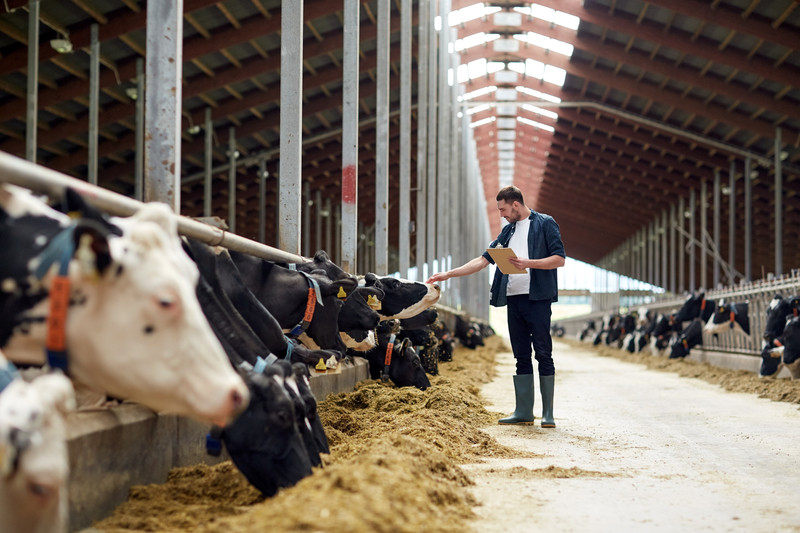
- Take care of dairy cows to ensure they produce the maximum amount of milk possible
- Ensures the cows receive their timely feed, food supplements, and vaccinations; take care of the
sick animals
- Dispose of their biological wastes properly and keep the cows’ resting areas clean and hygienic
- Use special equipment to milk the cows efficiently and pasteurise the milk as per government
regulations
- Draw up animal feeding plans that yield maximum milk production levels after consulting with
animal
nutritionists and livestock feed sales representatives
- Schedule and monitor on-farm audits to confirm herd health and well-being, employee training, and
milk quality
- Follow safety protocols and hygiene regulations as per the government and
organisational
requirements
Standard Work Environment
Working outdoors in various weather conditions and extreme temperatures is common practice
amongst Dairy Farmers. They spend the better part of their workday on site, although they may need to
travel to the offices of other stakeholders such as dairy producers, contractors, dealers, and
engineers.
Their work necessitates that they frequently come in contact with large animals, making protective
equipment and adherence to safety rules a must in the workplace.
Work Schedule
Dairy Farmers generally work more than eight to ten hours a day and on nights and weekends.
Their workday may frequently start before dawn.
Employers
Finding a new job might seem challenging. Dairy Farmers can boost their job search by asking their
network for referrals, contacting employers directly, using job search platforms, going to job fairs,
and leveraging social media. Self-employment is a viable option.
Dairy Farmers are generally employed by:
- Large Corporate Companies
- Small Dairy Producers
- Dairy Cooperatives
Workplace Challenges
- Working outdoors regardless of extreme temperatures and weather conditions
- Dealing with large animals can be threatening to personal safety
- Having to work odd hours like nights and weekends can get frustrating
- Waking up to begin work before dawn each day may get tiring and lead to a lack of social life
Suggested Work Experience
- Direct, hands-on, practical experience dealing with dairy cows is crucial. You will gain optimal
benefit from your tasks outside of the classroom when they line up perfectly with your lessons
inside it. You may get to hear countless stories from more experienced professionals and obtain
valuable hands-on experience when they manage to turn seemingly routine incidents into unique
learning moments.
Recommended Qualifications
>Dairy Farmers generally require a two- or four-year degree in dairy science,
agriculture, or
animal science Such courses should typically cover a range of subjects such as dairy
science, anatomy,
physiology, reproduction, crop science, farm management, technology, and agricultural marketing.
High School students interested in pursuing careers in the dairy farming industry would find
mathematics, accounting, agricultural science, digital technology, and biology helpful.
Certifications, Licenses and Registration
Certification demonstrates a Dairy Farmer’s competence in a skill set, typically through work
experience, training, and passing an examination.
Voluntary certification from an objective and reputed organisation in animal resources, dairy
cattle
nutrition, animal nutrition, animal genetics, or animal welfare science can help you stand out in a
competitive job market and increase your chances of advancement.
Dairy Farmers typically need to have a valid driver’s license. Typically, licensure
requires an
application, processing fees, an examination, and relevant education and experience.
Projected Career Map
Performance, experience, and the acquisition of professional qualifications drive the career progression
of Dairy farmers who can choose to go down diverse career paths.
Those with a degree in veterinary or agriculture may become Farm Managers or Head
Veterinarians.
Dairy Farmers who own their business can expand the operation to increase their profits. Hired hands
working on the farm may become Farm Managers or start their own dairy farming business.
Beneficial Professional Development
Continuing professional development (CPD) will help an active Dairy Farmer build personal skills and
proficiency through work-based learning, a professional activity, formal education, or self-directed
learning.
Working professionals may study to gain additional business management qualifications or attend farming
discussion groups to improve their work.
CPD is necessary for the regular renewal of essential certifications and licenses. It allows you to
upskill continually, regardless of your age, job, or level of knowledge.
Conclusion
By dint of the strength of their back and the sweat on their brow, Dairy Farmers overcome enormous and
arduous challenges to ensure the majority of the global population doesn’t miss out on an essential
component of their daily diet.
Like the products they supply, their vital contribution to the world often goes unremarked but is never
forgotten.
Advice from the Wise
Give equal priority to money management and on-farm activities.