Introduction
Agronomists are multidisciplinary plant and soil scientists who use their knowledge of
agriculture, forestry, animal husbandry, ornamental gardening, and landscaping in a noble endeavor to
co-create a world that is abundant in natural resources...a greener and cleaner planet for all its
sentient beings.
Also Known As:
- Agriculturist
- Agronomer
- Agronomy Research Manager
- Agronomy Specialist
- Arboreal Scientist
Typical Job Responsibilities
- Prepare and manage plans for crop improvement and enhanced production while safeguarding
environmental sustainability, safety, and quality
- Design and coordinate land development as well as landscape design projects for agricultural land
and forests
- Carry out land-use planning and green space management (agricultural, forests, and urban
environments) per applicable laws
- Soil sample fields including multiple depth sampling, sampling by geo-reference, and multiple site
sampling in the event of changes in soil texture
- Document field evaluation of seed, chemical, specialty products, and fertilizers
Standard Work Environment
An Agronomist works under the overall supervision of the Senior or Chief Agronomist or
Agricultural Scientist. The work is both varied and dynamic and has little in common with a normal
office routine.
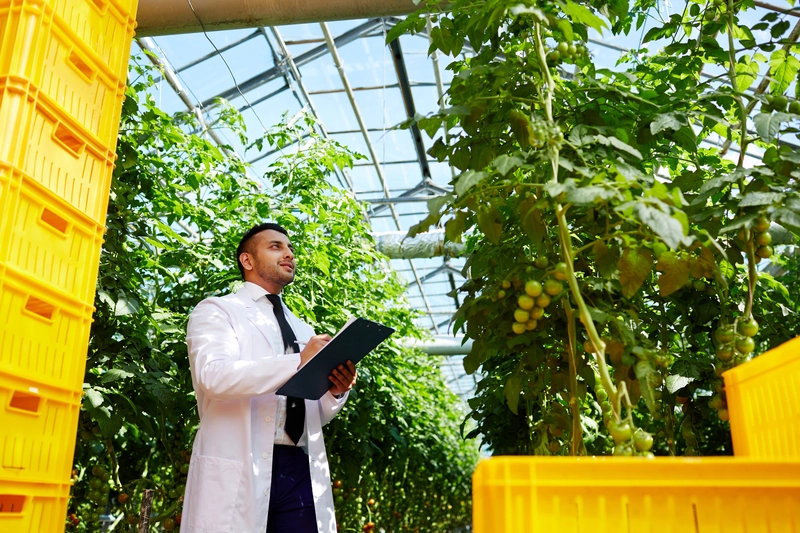
Agronomists have the advantage of being able to spend much of their time outdoors, except
during
inclement weather. A large part of an Agronomist’s work is done outside, in the open fields,
consulting
with farmers, or conducting research on plants and animals. They also spend time writing
reports in
offices or studying and carrying out research in testing laboratories. Some Agronomists may be required
to travel.
The dress code of an Agronomist depends on the location and sector. A business casual attire is
recommended for work at the office. Work in the fields and laboratory would require clothing specified
for those settings.
Work Schedule
Agronomist working hours may vary depending on the type of work but generally tend to be more
regular for laboratory-based work. Seasonality is a significant factor in the job of an Agronomist, with
work out in the fields mostly tending to take place in a specific period of the year. Therefore, a
higher degree of flexibility is required when working out in the fields or directly running a business.
Changes in weather conditions, production demands, or duration of the contract may dictate the working
hours, and you may end up working more than 40 hours per week.
Employers
Agronomists can become independent consultants for farmers and small businesses. They can also apply
their knowledge in their farming practices. Agronomists with advanced studies can become professors in
agricultural colleges. College placement offices and government employment offices can offer job
placement assistance.
Agricultural Chemists are generally employed by:
- Medium to Large-Scale Farms
- Crop & Seed Production Companies
- Fertilizer Manufacturing Companies
- Environmental Organizations
- Agricultural Land-Maintenance Companies
Workplace Challenges
- Gaining entry into the field requires extensive skill, knowledge, and experience
- Long working hours spent in the open areas in all sorts of weather conditions or the testing lab.
Suggested Work Experience
-
You will need a considerable amount of skill, knowledge, and experience to be an Agronomist.
Usually, you will be required to have two-four years of prior work experience in a related field.
Experience in farming or conservation work, even on a part-time or seasonal basis, is a
significant
advantage.
Recommended Qualifications
An accredited technical diploma or bachelor’s or master’s degree in agricultural
science,
environmental science, food science and technology, agricultural biotechnology, veterinary science,
Agronomy and crop science, agroecology and sustainable agriculture, viticulture and enology, or
plant
sciences is required to become an Agronomist.
The areas covered by a student Agronomist include agrarian sciences, animal husbandry, forestry science,
plant genetics, meteorology, phytopathology, botany, chemistry, biochemistry, hydraulics, rural
appraisal procedures, agricultural buildings as well as agricultural law. Generally, employers are
looking for candidates who have a PhD.
Certifications, Licenses and Registration
Agronomists can get certifications from authorized professional organizations that recognize expertise in
agricultural and food science. Depending on the law applicable in the country where they are based, an
Agronomist may need to be licensed by a specific professional body.
Successful certification programs serve and protect the public welfare by investigating individuals that
practice outside of the program’s Code of Ethics. They help a profession secure its future by earning
trust and respect.
Projected Career Map
An Agronomist with strong technical knowledge and planning skills may initially progress from a
consultancy role to a management position, such as Production Manager, and from there on to running a
whole farm, nursery, or livestock holding.
An alternative career route for an Agronomist might involve specializing - for example, in improving and
developing agricultural processes and practices such as sowing, planting, harvesting, and irrigation.
They may focus on sustainable development and organic farming or helping farmers and livestock breeders
to develop techniques and methods that are both profitable and environmentally sustainable.
An Agronomist might become a Research Scientist, studying productivity, crop genetics, storage methods,
or strategies for agri-food products. They may branch out into environmental protection, soil
conservation methods, and comb desertification, soil erosion, and pollution.
An Agronomist may choose to become a Technical Sales Representative and pursue a career in agricultural
marketing and sales.
Beneficial Professional Development
Agronomists may need some on-the-job training; however, it is generally assumed that you already have
the necessary skills and work experience to perform the job.
As an Agronomist, you may also be required to know how to use certain analytical or scientific
software,
computer-aided design (CAD) software, and analytical or scientific software tools such as
3dMapper,
Autodesk AutoCAD (Automatic Computer-Aided Design) software
A postgraduate qualification in crop science and management, animal technology, or agricultural
technology would prove advantageous in career advancement. You may decide you would like to
teach
agriculture or a related topic to complete a teaching qualification. It is also possible that an
Agronomist takes postgraduate courses to move into a different area such as journalism, marketing, or
business consulting. In addition to agricultural knowledge, Agronomists in top management
positions need
to have business analysis, financial planning, and accounting skills.
Conclusion
Working with and for the environment is one of the principal reasons you would choose to embark
on a
career as an Agronomist...if conservation of natural resources goes wrong, nothing else
will go right.
Advice from the Wise
Ease and security - are these the drugs that ease the constant challenge of the minds of men? Do
nations, like men, become lethargic when well-fed and bodily comfortable? The global food security
challenge is so big and so complicated that it cannot be solved by one category of organization.